
Many countries are heading into polls from major powers like USA, India, and Russia as well as emerging powers such as South Africa and Indonesia. The Southeast Asian nation is headed to polls on February 14,2024 with three major coalitions in the run for forming the government with simultaneous elections for the positions of President, Vice President, and the seats of Upper and Lower Houses of the Parliament.
The current President, Joko Widodo will be ineligible to run for a third term due to a two-term limit present in the constitution. The Presidencia candidates are required to be formally endorsed by a political party or a coalition who have 20 percent of seats in the DPR (Lower House of the Parliament) or 25 percent of popular votes in the previous election (2019).
Here, we will understand the three major alliances and the controversies that have stemmed in the elections.
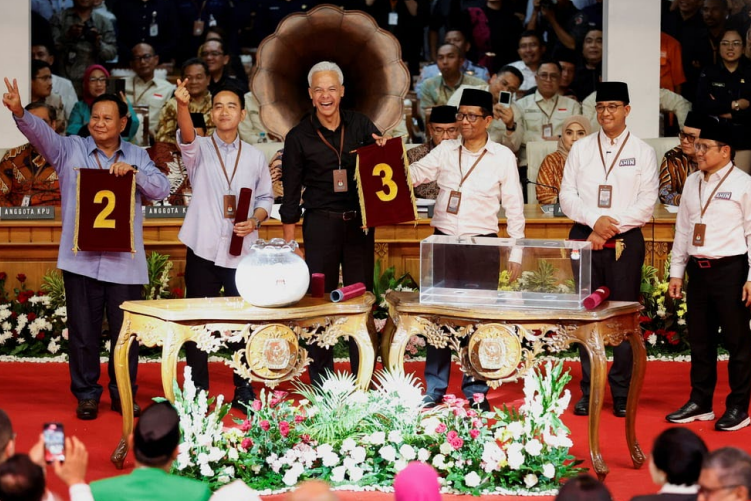
The three major alliances which are running for the elections are:-
1) Coalition of Change for Unity (CCU)
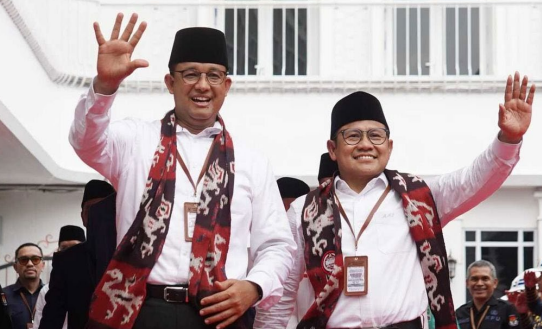
This political coalition is also known as the “Blue Sapphire Coalition,” which was formed between the NasDem party, PKS (Prosperous Justice Party) and Democratic Party, the latter leaving the alliance in September 2023. The coalition was formed in October 2022; however, it was not formalized until March 24, 2023. Two more parties, PKB (National Awakening Party) and Ummat also joined the alliance, the two parties being more focused on Islamist ideologies. A few local parties support these parties.
The Presidencial Candidate, Anies Baswedan, was the Governor of Jakarta from 2017-22. He was also the Minister of Education and Culture during Jokowi’s first term. His running Mate or Vice-presidential Candidate, Muhaimin Iskandar, is the leader of the PKB as well as the Deputy Speaker of the People’s Representative Council (Lower House) in the Indonesian Parliament.
This coalition is seen as a unification of modern and traditional Islamist parties, as the minor parties of this alliance have a harder inclination towards Islam, most of them being based in the Aceh Province, the only region in the country where Sharia Law is implemented. With the coalition lying in between Centre-Left to Far-Right in the political spectrum, the matters related to Islam could be the central theme of the agendas of this alliance.
2) Advanced Indonesia Coalition (AIC)
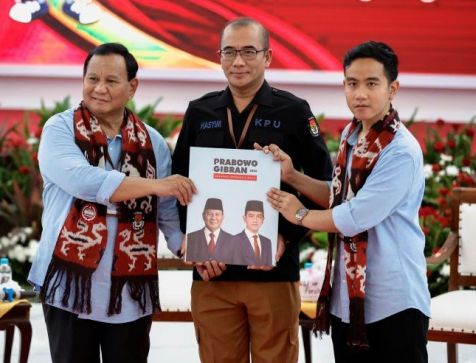
This alliance has its roots from the Onward Indonesia Coalition, the current governing faction. Gerindra (Great Indonesia Movement Party) is the leader of this alliance with Golkar (Party of Functional Groups), Democratic Party and PAN (National Mandate Party) as the leading figures with some regional centralist parties. PKB was also a part of this alliance before leaving the grouping to join CCU.
This alliance has gained a profound interest, mostly based on the choice for the presidential and Vice-presidential Candidates. Prabowo Subianto, the current Minister of Defense and the leader of the Gerindra Party is the presidential Candidate of this Alliance. He is known as an initiativetaking figure in the Indonesian Politics and history as he was a major official of the Indonesian Armed Forces with participation in missions in East Timor (Present Day Timor-Leste) and West Papua.
This will be the third consecutive presidential Campaign for Subianto, with his previous campaigns in 2014 and 2019 losing to Joko Widodo.
His running mate, Gibran Rakabuming Raka, is the eldest son of the current president and is the current mayor of Surakarta since 2021. His candidature has gained huge attention as initially, he was not eligible to stand in elections due to his age until an exemption was granted for him this year in October. This could be seen to gain the attention of the young voters as he is the youngest candidate among the six of them.
3) Alliance of Political Parties Supporting Ganjar Pranowo
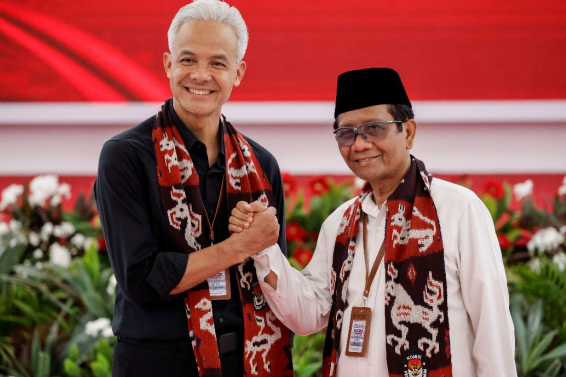
It is an alliance between Indonesian Democratic Party of Struggle (PDI-P), United Development Party (PPP), the Indonesian Unity Party and People’s Conscience Party. This alliance is named after the presidential Candidate, Ganjar Pranowo, former Governor of Central Java (2013-23) and a member of the Indonesia Democratic Party of Struggle.
His Running Mate, Mahfud MD, is the coordinating minister for Political, Legal, and Security Affairs of Indonesia and Acting Minister of Communication and Information Technology. He was also the 2nd Chief Justice of the Constitutional Court of Indonesia, the apex court of the country. His political stance towards the LGBT community is deemed to be highly controversial, with his ideals sticking closer to the Political influences.
Pranovo was rumored to be the primary candidate for Jokowi as his successor, often hinted by the President’s statements of a “white-hair President” after him. This was the case before he defected from the PDI-P, along his son after a series of tension between him and the party leadership.
The Political Discourse
The biggest controversy that stems out of this election was the legitimacy of Raka’s Vicepresidential candidature. As per the constitution, the Vice-Presidential candidate should be at least 40 years of age, however, an exemption was where individuals who are elected as regional leaders to be exempted from this criterion. It was deemed controversial with the opposition who were raising questions on the legitimacy of his candidature, a lot of them stemming from the bench which deliberated with the exemption which was headed by the President’s brother-inlaw. Indonesia’s politics has been heavily driven through political dynasties and military influence which was reflected a lot in profiles of the candidates and the connections they had with the former and present leaders of the country. Another controversy sparked from the recent
dinner of the country’s president with the three candidates where it was observed that the president was indirectly endorsing for a certain candidate after the President start to experience a fall out with his political party.
Some analysts believe that the stance of the President for the indirect or non endorsement of any candidate shows that Jokowi wants to play the role of a kingmaker as well as carve a safe path for his son in the next government either as a future Vice President or at a ministerial level. The political rift between the PDI-P Leadership and Jokowi due to the latter’s ambitions of bringing his clan into the political atmosphere, which eventually led to Gibran’s Vice Presidencial Candidacy with Jokowi’s former rival. His younger son, Kaesang Pangarep, is the chairman of the Indonesia Solidarity Party after leaving PDI-P, which one of the factors that created the rift between the President and his former party.
These tensions can impact largely with the voters being conflicted on who to support, especially with the fact that most of the candidates at one point or another were or are a part of the largest political party of the country.
What comes next?
The Election Commission of the country, KPU has declared the list of topics for the presidential Debates which will take place on a future date. The topics ranged from Law, Human Rights, Corruption, Governance and strengthening of Democracy. They also decided to retain the Vicepresidential Debates with more details to be revealed in the upcoming days.
The official period of campaigning has begun and will continue till February 10,2024. The country will head to polls on February 14,2024 and the results to be announced in due course. The inauguration ceremony for the newly elected members of Parliament on October 1, 2024, and for the new leaders of the state on October 20,2024.
Indonesia is one of the major regional powers and its elections will be closely monitored by various countries. It is also the largest Islamic country, in terms of population so the issues related to Islam and radicalization of the religion will be highly discussed in the polls. The political atmosphere will also determine the foreign policy with agendas like the territorial disputes in South China Sea as well as the domestic issues such as the conflict in West Papua, sinking of Jakarta and climate change.
REFERENCES
- Rizky Utama. (2023, September 15). The Anies-Muhaimin Candidacy: A Political Test for Modernist and Traditionalist Islam in Indonesia. The Diplomat.
https://thediplomat.com/2023/09/the-anies-muhaimin-candidacy-a-political-test-for-modernistand-traditionalist-islam-in-indonesia/ - Jaffrey, S. (2023, October 5). Indonesia’s 2024 Presidential Election Could Be the Last Battle of the Titans. Carnegie Endowment for International Peace.
https://carnegieendowment.org/2023/10/05/indonesia-s-2024-presidential-election-could-be-lastbattle-of-titans-pub-90711 - Reuters. (2023, October 30). Indonesia candidates call on president to remain neutral ahead of 2024 poll. https://www.reuters.com/world/asia-pacific/indonesia-candidates-call-presidentremain-neutral-ahead-2024-poll-2023-10-30/
- Reuters. (2023, October 25). Candidates for Indonesia’s presidential election.
https://www.reuters.com/world/asia-pacific/candidates-indonesias-presidential-election-2023-10-18/ - Jakarta Post. (2023, December 1). KPU announces topics for presidential debates . The Jakarta Post. https://www.thejakartapost.com/indonesia/2023/12/01/kpu-announces-topics-forpresidential-debates.html