Since gaining independence in 2002, Timor-Leste has traversed a complex terrain of international relations, motivated by the need to ensure its survival and demonstrate its political independence in the face of inherent weaknesses as a small, fledgling state. This dynamic is explored in Rebecca Strating’s work “The Post-Colonial Security Dilemma”, which conceptualises the post-colonial security challenge faced by Timor Leste’s government, emphasising the importance of cultivating absolute external state sovereignty as a foundation for “real” independence. This necessity highlights the nation’s continual struggle between reliance on external actors and the goal of true autonomy.
Timor-Leste’s foreign policy environment, like that of many small states, is marked by a fine line between leveraging international ties for survival and asserting sovereign interests. Despite their limited effect on global systems, small governments, such as Timor-Leste, exercise agency by strategically manoeuvring within their restrictions. Central to this strategic equation is the need to negotiate the vulnerabilities and instabilities inherent in their geopolitical stance.
This article delves into Timor Leste’s diplomatic engagement and regional engagements. As per Strating, three overarching goals have shaped Timor-Leste’s international relations: fostering friendly ties with regional powers, especially Australia and Indonesia; actively pursuing membership in regional and international organisations; and cultivating cooperation beyond immediate geographic boundaries. Timor-Leste’s aims demonstrate a commitment to collaborative diplomacy, with regional cooperation seen as crucial in furthering its nationbuilding programme and improving human development within its borders. According to former President Xanana Gusmão, Timor-Leste’s pursuit of cooperative international relations is a fundamental part of its identity as a small, emerging nation in the Asia-Pacific region.
Background
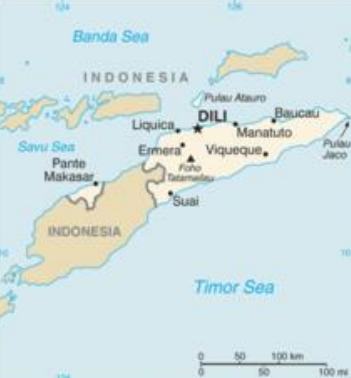
Democratic Republic of Timor Leste or Timór Lorosa’e which means ‘where the sun rises’ in the region’s official language is one of the youngest democratic countries of the 21st century. The island country primarily known for its natural gas and petroleum is located in the southeast of Asia and towards the north-west of Australia. The country includes the eastern half of the island of Timor (of which the western half is administered by Indonesia), the Oecussi region on the northwest portion of the island, and the islands of Pulau Atauro and Pulau Jaco.
Due to its location bridging Southeast Asia and Melanesia, Timor, an island rich in history and colonial influence, has a diverse range of cultures and languages. It has been involved in regional trading networks for centuries; by the 14th century, its role was characterised by exports such as sandalwood, slaves, honey, and wax. Attracted by the abundance of sandalwood, Portuguese traders arrived at the beginning of the 16th century, which ultimately resulted in Portuguese colonisation. Portugal gave up the western portion of the island in 1859 as a result of the rivalry between them and the Dutch.
Timor was occupied by the Japanese during World War II, but after the war, Portuguese rule returned. But when Indonesian forces invaded in 1975, it set off decades of conflict and a bloody campaign of retaliation against the Timorese people who were seeking independence. International intervention in response to the violence saw Australian-led peacekeeping forces put an end to unrest and clear the path to independence in 2002. Timor-Leste gained sovereignty in 2006, but internal conflict forced the UN mission to be established and an Australian-led stabilisation force to be sent in. Since then, despite sporadic political unrest, the country has advanced towards democratic governance.
Timor-Leste has a semi-presidential system in which the National Parliament appoints the prime minister and an elected president sharing power. The government places a high priority on international cooperation, as shown by its ambitions to join ASEAN and its membership in several organisations, including the Community of Portuguese Language Countries.
Economically, Timor-Leste is still heavily dependent on oil and other natural resources, with coffee exports serving as a supplement. However, issues like poor internet connectivity and inadequate transit infrastructure still exist, which adds to its isolation. However, the nation has developed a strong democracy which is evidenced by a high voter turnout rate, independent media, and polite conversation.
The island has a population of over 1.3 million people, skewed young because of a high fertility rate. Education initiatives are driving literacy gains, especially in the official languages of Portuguese and Tetum. The country’s vibrant local customs and beliefs coexist with the Catholic majority, especially in rural areas, highlighting the country’s cultural diversity.
Timor-Leste has been aggressively involved in regional diplomacy and foreign relations to bolster its standing in the international arena, despite its small size and relatively recent independence. Timor-Leste has pursued a foreign policy founded on the ideas of noninterference, collaboration, and peace ever since gaining independence in 2002.
ASEAN Membership
After gaining independence in 2002, the island nation started the process of applying to become a member of the Association of Southeast Asian Nations, or ASEAN. Despite the challenges arising from its inadequate infrastructure and underdeveloped economy, the nation submitted an official application for ASEAN membership in 2011, receiving observer status with conditional approval in 2022. The process entails meeting ASEAN’s conditions and obligations in the political-security, economic, and socio-cultural foundations. While some ASEAN members were concerned and wanted to focus on their underdeveloped brethren, Cambodia, several countries, including Indonesia, Malaysia, and the Philippines, supported East Timor’s accession.
Timor-Leste sees ASEAN membership as an intelligent choice towards its economic growth and diplomatic engagement. President Jose Ramos-Horta, who has been a major contributor to the nation’s foreign policy, emphasised the significance of carrying out the responsibilities that come with membership in the organisation. Furthermore, Australia views Timor-Leste’s ASEAN membership as advantageous for regional security and a strong economy. Both countries want to strengthen their relationship within the Southeast Asian Union and in the larger regional context, including with the Pacific and Indonesia.
All things considered, Timor-Leste’s path to ASEAN membership reflects its dedication to regional brotherhood and economic development, bolstered by diplomatic initiatives and extraregional support from allies like Australia.
Regional Engagement
Timor has had strong diplomatic relations with more than 120 countries since its independence and has made good relations with its neighbours.
AUSTRALIA
East Timor and Australia are close neighbours with strong political and economic relations. Before their deep bond as economic partners, Australia wanted to maintain good relations with Indonesia; the former was tacitly supportive of Indonesia’s colonisation of East Timor for many years. But when Australia started to back the UN in the late 1990s, this stance was altered. Since then, Australia has had a significant impact on the history of the fledgling republic. During Timor’s decision to declare independence from Indonesia in 1999 and during the internal turmoil in 2006, Australia led the military force that assisted in stabilising the nation and has been a major donor of aid ever since. Timor-Leste and Australia have been engaged in international agricultural cooperation, with Timor-Leste’s primary agricultural export being coffee. In 2021, Timor exported $1.03M worth of coffee.
INDONESIA
In 2002, diplomatic ties were established between Indonesia and East Timor. The island of Timor is shared by both. Despite a rocky past, ties with Indonesia are excellent. With $249M imports and $2.21M in 2021, Indonesia is East Timor’s biggest trading partner by far, and its percentage is rising quickly. Despite of ongoing border dispute, the neighbours have helped each other numerous times. After the 2018 earthquake that devastated Indonesia, Timor donated $750,000.
PHILIPPINES
Even before East Timor declared independence from Indonesia, the Philippines was a major contributor to UN-backed peacekeeping missions in Timor-Leste. As Asia’s only two mostly Catholic nations, relations with the Philippines improved dramatically when East Timor was multilaterally accepted as an independent state. The two countries are currently developing a stronger commercial partnership, as well as cultural and educational interactions. The Philippines has been a prominent backer of Timor-Leste’s inclusion in ASEAN. In 2008, East Timor and the Philippines signed three agreements to strengthen cooperation in marine and fisheries, education, and foreign service training. During their bilateral encounter, former Philippine President Gloria Macapagal Arroyo and former East Timorese President and current Prime Minister José Ramos-Horta saw the pacts being signed. The Philippines has vowed to enhance trade and business with East Timor, as well as to promote cultural and educational contacts.
SINGAPORE
Both countries established diplomatic relations on May 20, 2002. The Democratic Republic of Timor-Leste established an embassy in Singapore on December 1, 2010. Singapore Foreign Minister Dr Vivian Balakrishnan announced the opening of an embassy in Dili during a meeting with his Timorese colleague, Bendito dos Santos Freitas, on July 24, 2023. Singapore is the 6th ASEAN country to open an embassy in Timor’s capital. In 2021, Timor exported $91.7M mostly Crude Petroleum and imported $104M mostly Refined petroleum from Singapore.
MALAYSIA
Malaysia has participated in multiple UN peacekeeping missions in the country, including Operation Astute during the 2006 East Timorese crisis. Malaysia has also assisted Timor-Leste in the development of human resources through various training programmes, as well as East Timor in its nation-building efforts. East Timorese are currently considering Malaysia as a model for developing their countries. East Timor has an embassy in Kuala Lumpur, while Malaysia has an embassy in Dili.
VIETNAM
Diplomatic ties between the two nations were established on July 28, 2002. Vietnam holds diplomatic status in East Timor through its embassy in Jakarta, Indonesia. East Timor maintains an embassy in Hanoi.
Maritime Border Dispute
The long-standing conflicts between Australia and Timor-Leste over maritime borders and the extraction of resources in the Timor Sea have been resolved through a variety of treaties and legal procedures. The primary point of dispute is the segmentation of boundaries, income sharing from the Greater Sunrise oil and gas production and the method of downstream processing for the obtained resources.
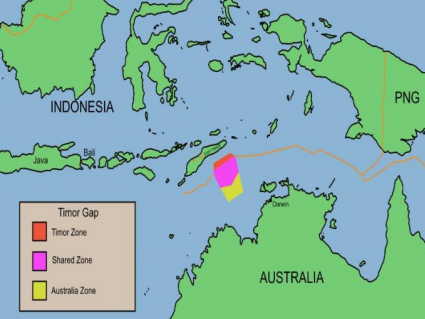
Despite media reports of an end, the March agreement between Australia and Timor-Leste, although crucial, does not fully resolve the disputes, especially those related to Greater Sunrise development. Initial agreements, such as the 2006 Certain Maritime Arrangements in the Timor Sea (CMATS) treaty, sought to distribute profits evenly while delaying the permanency of the disputed borders until 2050, keeping the issue of further processing unsolved.
Efforts to address problems included lawsuits at the International Court of Justice and two cases conducted by Timor-Leste over sensitive matters such as suspected spying during the negotiation process. The succeeding compulsory conciliation phase, led by a five-member Conciliation Commission, was successful, resulting in the 2018 Timor Sea Treaty. The conciliation process was characterised by cooperation and flexibility, and it included confidence-building measures as well as comprehensive negotiations about marine delimitation and resource development.
Highly qualified mediators and legal officials from both sides, including prominent political figures, played critical roles throughout the entire process. Notable figures included Timor-Leste’s Prime Minister Mari Alkitiri and Peter Galbraith, as well as senior officials from The Greater Sunrise Field is located between Timor Leste and Australia (Source: NS Energy)
Australia’s Department of Foreign Affairs and Trade. Sir Michael Wood and Professor Vaughan Lowe QC represented Timor-Leste, while Solicitor-General Justin Gleeson SC, the late Professor James Crawford SC, and Sir Daniel Bethlehem QC represented Australia. The Conciliation Commission treated both parties equally and respectfully, reflecting the procedures’ balanced nature. Despite these efforts, many practical concerns remain unanswered, such as the placement of Greater Sunrise’s processing facilities and pipelines.
International Organisation
Timor-Leste actively participates in several international organisations, notably the United Nations (UN) and World Trade Organisation (WTO), where it campaigns for topics such as peacekeeping, sustainable development, and human rights. Since 2002, Timor has been an active member of the Community of Portuguese Language Countries (CPLC) for cooperation and development with other Portuguese-speaking countries located in Europe, South America, Asia, Sub-Saharan Africa and Oceania. The island nation is an active participant in the Oceania Customs Organisation (OCO) as well as the World Customs Organisation (WCO). The most significant and held valuable by Timor themselves is their almost
membership in ASEAN. Timor-Leste believes that it can be a better regional partner and contribute significantly by being a member.
Economic Partnerships
Timor-Leste is beginning on a revolutionary path to economic resilience and prosperity via strategic relationships with the European Union (EU), the Asian Development Bank (ADB), and other major global actors. The formation of strong economic alliances aimed at promoting inclusive growth, job creation, and long-term development is central to this effort. Timor-Leste’s economic policy is based on a commitment to diversification and resilience, as described in the country’s long-term Strategic Development Plan (SDP) and Economic Recovery Plan. Timor-Leste, in close collaboration with the EU, is positioned to benefit from EU development cooperation programmes from 2021 to 2027. These actions not only enhance investment opportunities through the Global Gateway but also prepare the path for Timor-Leste’s membership to the interim Economic Partnership Agreement (EPA), which strengthens its integration into the global commercial scene.
The EU’s steady assistance, along with ADB’s Country Partnership Strategy (CPS) for Timor-Leste (2023-2027), demonstrates a shared commitment to Timor-Leste’s economic recovery and long-term development goals. Furthermore, Team Europe’s collective participation, which includes the EU, the European Investment Bank, and Portugal, strengthens the collaborative spirit that drives Timor-Leste’s economic ambitions.
Timor Leste And India
Timor-Leste’s longstanding ties with India have created a complex tapestry of cultural interchange and diplomatic collaboration. Since the early modern era, Indian traders have been to Timor-Leste in search of sandalwood, laying the basis for long-term commercial links. With the Portuguese colonisation of both regions, these links grew stronger, as indicated by the building of garrisoned centres in India to aid commerce.
In recent history, India’s key role in recognising Timor-Leste’s independence highlighted the two countries’ unity. Omar Abdullah, former Minister of State for External Affairs, attended Timor-Leste’s Independence Day festivities in 2002, symbolising India’s firm support and marking the start of official diplomatic relations in 2003. Mutual respect and collaboration have grown, with Timor-Leste supporting India’s ambition for permanent membership in the
UN Security Council and actively engaging in numerous international projects championed by India, such as the establishment of International Yoga Day.
High-level contacts between officials strengthened bilateral relations, with trips ranging from health conferences to finance summits. Significantly, Timor-Leste’s Vice Minister of Health Natalia D. Araujo’s 2013 visit to Delhi was significant since she was the first Timorese government official to visit India. Such exchanges demonstrate a common commitment to strengthening collaboration across industries.
As Timor-Leste and India continue to navigate their paths of development, their alliance is grounded in respect for one another, shared ideals, and an aim for a successful future.
THE WAY FORWARD
Despite its small size and young age, Timor-Leste has made great progress in regional diplomacy and foreign relations. As it progresses, numerous important issues emerge.
First, Timor-Leste’s pursuit of ASEAN membership demonstrates its commitment to regional integration and economic progress. While the process continues to be challenging, the country’s commitment to satisfying ASEAN’s requirements demonstrates its resolve to play an active part in Southeast Asia’s geopolitical environment. Second, Timor-Leste’s interaction with regional powers such as Australia, Indonesia, and the Philippines demonstrates its capacity to
negotiate complicated historical processes while forging mutually beneficial alliances. These alliances not only help to boost economic development but also build diplomatic connections, establishing the groundwork for future collaboration. Third, the settlement of maritime boundary issues with Australia indicates Timor-Leste’s ability to negotiate and resolve conflicts. Timor-Leste has taken steps to protect its territorial interests and exploit the potential revenue of its marine resources by utilising international legal processes and engaging in discussions.
Moving on, Timor-Leste’s emphasis on diversifying its economy and promoting inclusive growth through strategic collaborations with global entities such as the European Union and the Asian Development Bank is critical. Timor-Leste can reduce its reliance on natural resources and achieve sustainable growth by focusing on economic resilience and long-term development goals. Further, the improvement of diplomatic ties with India creates prospects for cultural exchange and collaboration in a variety of industries. As both countries continue to pursue their development objectives, mutual respect and collaboration will be critical in realising shared goals of prosperity and stability.
In conclusion, Timor-Leste’s involvement in regional diplomacy and global relations reflects its desire for sovereignty, economic growth, and international collaboration. By negotiating geopolitical complications, settling conflicts, and cultivating strategic relationships, Timor-Leste is ready to express its global presence and define its future trajectory as a resilient and vibrant nation.
REFERENCES
- Starting, R. (2018). Timor-Leste’s Aspirational Foreign Policy. In- The Post-Colonial Security Dilemma: Timor-Leste and the International Community (pp. 123-160). ISEAS– Yusof Ishak Institute
- CIA World Factbook: Central Intelligence Agency. (n.d.). Timor-Leste. The World Factbook.
https://www.cia.gov/the-world-factbook/countries/timor-leste/ - The Diplomat. (2023, May). Supporting Timor-Leste’s ASEAN Membership Should Be a Priority for Its Friends. https://thediplomat.com/2023/05/supporting-timor-lestes-aseanmembership-should-be-a-priority-for-its-friends/
- BBC News. (n.d.). Timor-Leste country profile. Retrieved from
https://www.bbc.com/news/world-asia-pacific-12644608 - ASEAN Secretariat. (2007, June 9). Timor-Leste submits formal application for ASEAN membership. Retrieved from
https://web.archive.org/web/20070609190633/http://www.aseansec.org/afp/154.htm - Reuters. (2022, November 11). ASEAN agrees in principle to admit East Timor as 11th member. Retrieved from https://www.reuters.com/world/asean-agrees-principle-admiteast-timor-11th-member-2022-11-11/
- Observatory of Economic Complexity. (n.d.). East Timor (TLS) Profile. Retrieved from
https://oec.world/en/profile/country/tls - TopNews. (n.d.). Philippines, East Timor sign three agreements to boost relations. Retrieved from https://www.topnews.in/philippines-east-timor-sign-three-agreementsboost-relations-258515
- Ministry of Foreign Affairs, Singapore. (2017, August 20). Diplomatic and Consular Relations – Open Diplomatic Missions. Retrieved from
https://web.archive.org/web/20170820202434/https://app1.mfa.gov.sg/dipcon/pdf/dipconopen.pdf - Channel News Asia. (n.d.). Singapore to set up embassy in Timor-Leste capital Dili: Vivian Balakrishnan. Retrieved from
https://www.channelnewsasia.com/asia/singaporeset-embassy-timor-leste-capital-dili-vivian-balakrishnan-3652611 - Permanent Mission of Malaysia to the United Nations. (n.d.). General Assembly. Retrieved from
https://web.archive.org/web/20140203103623/http://www.un.int/malaysia/GA/66/66unga68_Timor-Leste.pdf - The Sun Daily. (n.d.). Malaysia’s aid to Timor-Leste. Retrieved from
https://web.archive.org/web/20131002070135/http://www.thesundaily.my/news/845409 - Ministry of Foreign Affairs, Malaysia. (n.d.). Embassy of Malaysia in Timor-Leste. Retrieved from https://www.kln.gov.my/web/tls_dili/home
- Ministry of Foreign Affairs, Vietnam. (n.d.). Bilateral relations – Timor-Leste. Retrieved from https://www.mofa.gov.vn/en/cn_vakv/ca_tbd/nr050131104855/ns071207143638
- Australian Government. (n.d.). Treaty Series 2007 No. 12 – Timor Sea Treaty. Retrieved from https://www.austlii.edu.au/au/other/dfat/treaties/2007/12.html
- Department of Foreign Affairs and Trade, Australia. (n.d.). Australia’s maritime arrangements with Timor-Leste. Retrieved from
https://www.dfat.gov.au/geo/timorleste/australias-maritime-arrangements-with-timor-leste - Asia Maritime Transparency Initiative. (n.d.). Timor Sea Boundary Agreement: An Incomplete Victory. Retrieved from https://amti.csis.org/timor-sea-boundary-agreementincomplete-victory/
- Centre for International Law, National University of Singapore. (n.d.). The AustraliaTimor-Leste Maritime Boundary Dispute. Retrieved from
https://cil.nus.edu.sg/blogs/theaustralia-timor-leste-maritime-boundary-dispute/ - Parliament of Australia. (n.d.). Report 168 – Certain Maritime Arrangements – TimorLeste. Retrieved from
https://www.aph.gov.au/Parliamentary_Business/Committees/Joint/Treaties/CMATS/Report_168_Certain_Maritime_Arrangements-_TimorLeste/section?id=committees%2Freportjnt%2F024051%2F24472 - Government of Timor-Leste. (n.d.). Ministry of Foreign Affairs and Cooperation.Retrieved from
http://timor-leste.gov.tl/?p=143&lang=en&l=1 - United Nations in Timor-Leste. (n.d.). UN Entities in Timor-Leste. Retrieved from
https://timorleste.un.org/en/about/un-entities-in-country - General Directorate of Customs, Timor-Leste. (n.d.). International Organizations, Standards, and Agreements. Retrieved from
https://customs.gov.tl/doing-business/intiorgs-standards-agreements/ - European External Action Service. (n.d.). Democratic Republic of Timor-Leste: First Partnership Dialogue between the European Union takes place in Dili. Retrieved from
https://www.eeas.europa.eu/eeas/democratic-republic-timor-leste-first-partnershipdialogue-european-union-takesplace-dili_en?s=254#:~:text=Timor%2DLeste%20and%20the%20EU,Economic%20Partnership%20Agreement%20(EPA). - Asian Development Bank. (n.d.). Timor-Leste Country Partnership Strategy 2023-2027.
Retrieved from
https://www.adb.org/documents/timor-leste-country-partnership-strategy2023-2027#:~:text=Asian%20Development%20Bank’s%20(ADB)%20country,Recovery%20Pl
an%20(ERP)%3B%20it - European Union International Partnerships. (n.d.). Timor-Leste. Retrieved from
https://international-partnerships.ec.europa.eu/countries/timor-leste_en - Ministry of External Affairs, India. (2016, December). India-Timor-Leste Relations.
Retrieved from
https://www.mea.gov.in/Portal/ForeignRelation/India_Timor_Leste_Dec2016.pdf